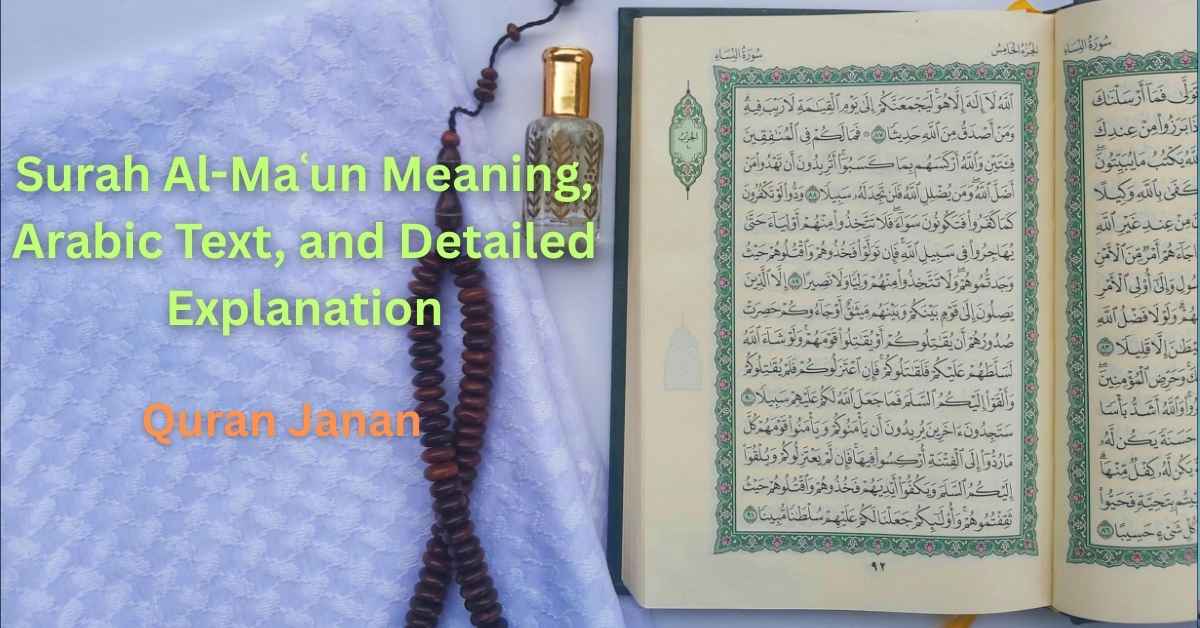
Surah Al-Maun meaning reveals a powerful Quranic message about the true nature of faith, worship, and social responsibility. Revealed in Makkah, this short yet impactful Surah challenges the idea that prayer alone defines righteousness. Allah exposes hypocrisy by linking belief in the Day of Judgment with compassion for orphans, care for the poor, sincerity in Salah, and everyday acts of kindness. Through its seven verses, Surah Al-Maʿun makes it clear that Islam is not limited to rituals but demands moral character, mercy, and concern for others. The Surah strongly condemns those who pray for show, neglect their prayers’ meaning, and withhold even small help (Al-Maʿun) from people in need. For modern readers, Surah Al-Maʿun remains deeply relevant, reminding Muslims that true worship must shape behavior, social ethics, and daily interactions. By studying its Arabic text, authentic English translation, and classical tafsir, believers gain a clearer understanding of how faith must translate into sincere worship and practical compassion in real life.
Surah Al-Maʿun – Arabic Text, Meaning, and Detailed Explanation
Introduction to Surah Al-Maʿun
Surah Al-Maʿun is the 107th chapter of the Holy Quran, revealed in Makkah, and consists of seven powerful verses. This Surah addresses one of the most critical themes in Islam: the relationship between faith, worship, and social responsibility. Allah strongly condemns hypocrisy, showing that true belief is not limited to prayer alone, but must also appear in one’s character, compassion, and treatment of others.

Meaning of the Word “Al-Maʿun”
The Arabic word “Al-Maʿun” (الماعون) refers to small acts of kindness, daily assistance, or basic necessities such as food, tools, or household items. Scholars explain that the term symbolizes any simple help that benefits others. By naming the Surah Al-Maʿun, Allah highlights that even small acts of generosity matter greatly in Islam.
Classification and Background of Revelation
Most scholars, including Ibn Kathir and Imam Al-Tabari, agree that Surah Al-Maʿun is Makki, though some verses may also relate to behavior seen later in Madinah. The Surah was revealed to expose false religiosity, especially among those who claimed belief but lacked compassion and sincerity.
Core Theme of Surah Al-Maʿun
The Surah establishes a vital Quranic principle:
👉 Faith without action is meaningless.
Allah makes it clear that:
-
Denying the Day of Judgment
-
Neglecting the poor and orphans
-
Praying without sincerity
are all signs of spiritual failure, not righteousness.
Arabic Text of Surah Al-Maʿun
Below is the original Arabic text, preserved exactly as revealed:
Verse 1
أَرَأَيْتَ الَّذِي يُكَذِّبُ بِالدِّينِ
Verse 2
فَذَٰلِكَ الَّذِي يَدُعُّ الْيَتِيمَ
Verse 3
وَلَا يَحُضُّ عَلَىٰ طَعَامِ الْمِسْكِينِ
Verse 4
فَوَيْلٌ لِّلْمُصَلِّينَ
Verse 5
الَّذِينَ هُمْ عَن صَلَاتِهِمْ سَاهُونَ
Verse 6
الَّذِينَ هُمْ يُرَاءُونَ
Verse 7
وَيَمْنَعُونَ الْمَاعُونَ
English Meaning of Surah Al-Maʿun
The following is a 100% accurate English translation, supported by classical Tafsir:
Verse 1 Meaning
“Have you seen the one who denies the Day of Judgment?”
Verse 2 Meaning
“That is the one who repulses the orphan.”
Verse 3 Meaning
“And does not encourage the feeding of the poor.”
Verse 4 Meaning
“So woe to those who pray.”
Verse 5 Meaning
“Those who are heedless of their prayer.”
Verse 6 Meaning
“Those who make a show (of their deeds).”
Verse 7 Meaning
“And withhold even simple assistance.”
Explanation of Verse One – Denial of Accountability
The Surah opens with a rhetorical question, forcing reflection. Denying “Ad-Deen” (the Day of Judgment) means rejecting divine accountability. Scholars explain that disbelief in the Hereafter leads directly to moral corruption, because a person no longer fears consequences.
Explanation of Verse Two – Abuse of the Orphan
Allah describes the denier as someone who harshly pushes away the orphan. In Islam, orphans hold a sacred status. The Prophet Muhammad ﷺ said:
“I and the one who sponsors an orphan will be together in Paradise.”
— Sahih al-Bukhari
Mistreating orphans is therefore a clear sign of a hardened heart.
Explanation of Verse Three – Neglecting the Poor
This verse condemns those who do not even encourage feeding the poor. Islam teaches that believers must not only give charity themselves but also promote social welfare. A society that ignores poverty reflects a lack of true faith.
Transition from Social Crimes to Worship
From verse four onward, Allah shifts focus from social injustice to corrupt worship, showing that both are deeply connected. A person who harms society cannot be considered righteous, even if they pray regularly.
Explanation of Verse Four – Warning to Negligent Worshippers
The phrase “Woe to those who pray” is shocking. Prayer alone does not guarantee salvation if it lacks sincerity, humility, and consistency. This verse warns against empty rituals without faith.
Explanation of Verse Five – Heedlessness in Salah
Scholars explain “heedless of their prayer” as:
-
Delaying Salah intentionally
-
Praying without concentration
-
Treating prayer as a burden
This verse emphasizes that Salah must shape behavior, not exist separately from daily life.
Explanation of Verse Six – Showing Off (Riya)
Riya means performing good deeds to be seen by people, not to please Allah. The Prophet ﷺ warned:
“The thing I fear most for you is minor shirk: showing off.”
— Musnad Ahmad
This verse exposes the danger of spiritual hypocrisy.
Explanation of Verse Seven – Withholding Small Kindness
The Surah ends by condemning those who refuse even basic help. Scholars say Al-Maʿun includes:
-
Lending household items
-
Helping neighbors
-
Small acts of generosity
Islam values consistent small kindnesses, not just large public donations.
Major Lessons from Surah Al-Maʿun
This Surah teaches that:
-
Faith must transform character
-
Prayer without compassion is incomplete
-
Social justice is part of worship
-
Hypocrisy leads to destruction
Surah Al-Maʿun and Islamic Ethics
Surah Al-Maʿun forms the foundation of Islamic social ethics. It reminds Muslims that:
-
Caring for the weak is obligatory
-
Worship must be sincere
-
Community responsibility is faith in action
Relevance of Surah Al-Maʿun Today
In today’s world, where inequality and neglect are common, Surah Al-Maʿun remains deeply relevant. It challenges believers to:
-
Help the needy
-
Be sincere in worship
-
Practice kindness daily
Spiritual Benefits of Reciting Surah Al-Maʿun
Regular recitation helps:
-
Purify intentions
-
Increase compassion
-
Strengthen awareness of accountability
-
Improve sincerity in Salah
Surah Al-Maʿun in Daily Prayers
Because of its short length and strong message, Surah Al-Maʿun is often recited in Salah. Its meaning reminds believers why they stand before Allah and how faith must reflect in real life.
Scholarly Commentary on Surah Al-Maʿun
Classical scholars like Ibn Kathir, Al-Qurtubi, and Al-Tabari agree that this Surah condemns:
-
Hypocrisy
-
Social injustice
-
Empty worship
It proves that Islam is a complete way of life, not just rituals.
Connection Between Belief and Behavior
Surah Al-Maʿun powerfully confirms that:
Belief in the Hereafter must produce mercy in the heart.
A believer who ignores suffering has misunderstood faith.
Importance of Learning the Quran with Understanding
Surahs like Al-Maʿun show why learning the Quran with meaning and Tafsir is essential. Without understanding, one may recite verses but miss their life-changing guidance.
Learn the Quran Online with Quran Janan
If you want to learn the Quran with proper Tajweed, authentic translation, and deep understanding, Quran Janan provides online Quran classes worldwide. Qualified teachers offer one-to-one lessons, flexible timings, and structured courses for children and adults. Whether you are a beginner or seeking advanced understanding, Quran Janan helps you connect with the Quran from anywhere in the world.
FAQ Answers
Q1: What is Surah Al-Maun about?
Answer:
Surah Al-Maun is about true faith and social responsibility.
It criticizes people who pray but ignore the poor, orphans, and basic kindness, showing that real Islam includes good character and compassion.
Q2: Which Surah has 200 verses?
Answer:
Surah Al-Baqarah has 286 verses and is the longest Surah in the Quran.
No Surah has exactly 200 verses, but Al-Baqarah is often searched due to its length and importance.
Q3: What are the benefits of Surah Al-Maun?
Answer:
Surah Al-Maun encourages kindness, sincerity, and helping the needy.
Reciting it reminds believers that worship must be supported by good deeds and moral behavior.
Q4: What is the summary of Surah Al-Nas?
Answer:
Surah Al-Nas seeks protection from evil whispers.
It teaches Muslims to seek refuge in Allah from Shaytan and negative thoughts that harm faith and peace.
Q5: What are the benefits of Surah Al-Mu’minun?
Answer:
Surah Al-Mu’minun describes the qualities of successful believers.
It strengthens faith, improves character, and reminds Muslims of accountability in the Hereafter.
Q6: What is Surah Sad about?
Answer:
Surah Sad focuses on truth, patience, and the consequences of arrogance.
It includes stories of Prophet Dawud, Sulaiman, and Ayub to teach humility and reliance on Allah.
Q7: What does Tasbih mean in Islam?
Answer:
Tasbih means glorifying Allah, usually by saying SubhanAllah.
It is a form of remembrance (zikr) that brings peace and spiritual reward.
Q8: Which Surah releases depression?
Answer:
Surahs like Ad-Duha, Ash-Sharh, and Yusuf are commonly recited for emotional relief.
They provide hope, reassurance, and reminders that hardship is temporary.
Q9: Which two duas are not rejected?
Answer:
The dua of the oppressed and the traveler are not rejected.
Islam teaches that Allah responds quickly to sincere supplication in hardship.
Q10: How to get a dua 100% accepted?
Answer:
There is no guaranteed formula, but dua is more likely accepted with sincerity, halal earnings, patience, and trust in Allah.
Making dua at special times like sujood or tahajjud increases acceptance.
Q11: Which tasbih is most powerful?
Answer:
SubhanAllah, Alhamdulillah, and Allahu Akbar are among the most powerful tasbih.
These words are light on the tongue but heavy in reward.
Q12: What is Allah’s favourite zikr?
Answer:
La ilaha illallah is considered the greatest zikr.
It affirms pure monotheism and holds immense spiritual reward.
Q13: Can zikr be done silently?
Answer:
Yes, zikr can be done silently or aloud.
Silent remembrance is especially powerful for focus and sincerity.
Q14: Which Surah can change your life?
Answer:
Surahs like Al-Fatiha, Al-Baqarah, and Yusuf deeply impact faith and mindset.
Regular recitation with understanding leads to spiritual and personal transformation.